
About Maps-Of-Netherlands
The tale of MapofNetherlands.co UK’s stealthy ascent illustrates how a seemingly straightforward search can serve as a guide for a nation’s identity, trade, and cultural influence in British society.
In addition to roads and rail lines, a click unlocks an ecosystem that includes high-resolution photos, PDFs, WorldAtlas summaries of Dutch physical geography and boundaries, Google Maps search tiles, vector posters and wall prints from UK and EU stores, and a rabbit hole of old Dutch charts.
Examine the following carefully: marketplace listings for Benelux political maps with distinct borders of the Netherlands, Belgium, and Luxembourg; carefully laminated wall maps sized for boardrooms and classrooms; and “The Netherlands Maps & Facts” pages that outline important cities, rivers, and national parks.
MapofNetherlands.co UK isn’t a conventional brand; rather, it’s a shortcut, a user journey that guides visitors to a very particular, really useful image of the Netherlands.
Brexit has sharpened that picture.
Reminding UK passport holders that they are now considered third-country nationals, Wise’s post-Brexit advice on relocating to Amsterdam reads like a useful appendix to the map itself.
On the Randstad’s ring of cities, contour lines and coordinates transform into tenancy searches, school catchment regions, and commute times, transforming a map into a life plan.
A geography-as-brand story is simultaneously reinforced by profiles such as Nations Online and European congress blurbs (EHPS 2025 highlights the Netherlands’ flat landscapes and distinctive windmills): small, linked, and marine-minded.
In this way, MapofNetherlands.co UK serves as both a cultural link and an index page for a nation that also happens to be the hub of European logistics.
| Category | Information (for insertion into WordPress) |
|---|---|
| Country | Western/Northwestern Europe’s Netherlands (Nederland) |
| Coordinates | Roughly 52.1326° N, 5.2913° E |
| Borders | Northwest: North Sea; South: Belgium; East: Germany |
| Terrain | Significantly below sea level, vast dike and polder systems, and a large amount of flat land |
| Capital or Seat of Government | Amsterdam is the capital; The Hague is the seat of government. Major cities include The Hague, Rotterdam, Amsterdam, Utrecht, Eindhoven, and Groningen. |
| The Economy and Industry | High tech (Eindhoven), ports and logistics (Rotterdam), agri-food exports, and creative industries |
| Benelux Context | Frequently plotted with Belgium and Luxembourg for examining commerce, policy, and transportation |
| Usage for UK Readers | Planning relocation, supply-chain routing, tourism, investment, and education |
| Reference (genuine source) | WorldAtlas: Maps and Information on the Netherlands |
The thriving mapping economy surrounding MapofNetherlands.co UK is instructive.
Casual shoppers who choose wall art from UK stores that offer vector-clean outlines and Dutch canvas prints, tasteful, minimalist, data-adjacent décor, are at one extreme.
Procurement teams, on the other hand, analyze depth contours and highway spines like balance sheets while comparing Benelux political maps to arrange shipping routes from Felixstowe or Immingham to Rotterdam.
Pitch decks, customs briefings, and insurance risk presentations are all supported by images from Shutterstock’s collection of Benelux political maps and Germany–Netherlands border graphics, which now serve as the clip-art layer of international trade.
The same geographic needle is threaded by culture.
Virgil van Dijk and the Dutch national team create an itinerant atlas across Europe, transforming cities into waypoints in the collective imagination.
Van Gogh, whose museum anchors an address many UK travelers mark on a mental map before they book a flight, adds another layer.
Rem Koolhaas, the architect whose global urbanism has taught generations to read a city the way a hydrologist reads a delta, contributes as well.
DJs like Tiësto and Martin Garrix map the Netherlands in a different register, including late-night cabs cutting across polder landscapes, train station platforms, and festival circuits.
These pieces are captured by MapofNetherlands.co UK, which matches them with the real world, ports, stations, and stadiums, to create a composite image that is both personal and practical.
Since there is still misunderstanding over “Holland” versus “the Netherlands,” accuracy is crucial.
A common footnote in UK-facing content is Wikipedia’s reminder that Holland is an area on the western coast, not the entire country.
Poster titles and customs documentation show how important it is to get names and boundaries correct.
A single naming mistake can spread to shipping labels and bills, and a careless caption can transform a classroom wall into a disinformation machine.
Therefore, improved map literacy, unambiguous borders with Belgium and Germany, exposure to the North Sea, and accurate provincial delineations, quietly saves actual money.
The reference layer appears narrower than it actually is.
The Netherlands is framed as walkable, wind-milled, and networked in European conference literature.
Google Maps absorbs user intent with a single “Netherlands” search, nudging commuters toward pin-precision.
Scribd and other repositories circulate detailed PDFs for teachers and trip planners.
Nations Online compiles a concise national profile that many UK schools rely on.
Every piece is a tile, and when combined, they give UK readers a near-real-time nation brief that was once accessible only through a good bookstore, an encyclopedia, and a travel agency.
A substantial analog current is also present.
The sixteenth and nineteenth-century charts sold by Chester antique map dealers remind us that the Netherlands was mapping before the majority of today’s capitals were paved.
Modern sea-level maps echo the ancient plates, which are dotted with soundings and sandbanks.
A laminated wall map, “write on / wipe off,” connects past and present in the classroom.
It becomes a surface on which students draw freight corridors and dike lines, and a geography teacher switches between the Zuiderzee past and the IJsselmeer present with a marker and cloth.
It is impossible to dodge the climate story.
The world has learned from a nation with a sizable portion of its land below sea level that maps are tools for civil defense rather than decoration.
Dutch exemplars such as Rijkswaterstaat’s water management system, the Maeslantkering storm surge gates, and the combinatorial skill of polders and pumps are frequently cited by British planners when discussing floodplains in Somerset or York.
For UK audiences, MapofNetherlands.co UK serves as a backdoor into resilience literacy.
Popular maps used for tourism, advertising, and Benelux political outlines serve as entry points to deeper layers such as delta planning, flood risk, and dike maintenance.
The same cartography that sells canvas prints also describes a future-proofing handbook.
These lines are directly aligned with the joint UK–NL economy.
The port of Rotterdam is more than a pin; it is the hub of supply networks that feed enterprises and supermarkets across the United Kingdom.
The A15 and A16 are used by haulage companies to price their weeks, just as column inches are used by editors.
In the same way an art enthusiast follows a brushstroke, logistics managers follow the Rhine–Meuse delta on a Benelux map. The narrative is contained in the geometry.
Procurement teams search for visual confirmation of costs, including kilometers, cabotage limitations, ferry schedules, and the bank of a river on which a warehouse is situated, when they type MapofNetherlands.co UK.
Another layer is added by mobility.
Wise’s post-Brexit checklist for migrating to Amsterdam turns cities into compliance maps that include neighborhoods, residence periods, and document paths.
Meanwhile, articles about quality of life, noting the Netherlands’ high rankings by AtoZ Serwis Plus for welfare, public services, and livability, keep UK readers balancing bike lanes against pay bands.
If the Netherlands consistently tops happiness and infrastructure indexes, the map becomes a weighted surface.
Its hotspots, such as Groningen’s student quarter, Eindhoven’s R&D corridors, and Utrecht’s bike network, carry teachable density.
The geography of the education industry has quietly become more professional.
Benelux area maps are increasingly used in schools to teach policy blocs, scale, and EU coherence.
Institutions invest in labeled vector maps with legible typography for large-format printing or projection.
It is a noticeable trend, though not glamorous unless clarity itself is seen as a luxury.
The same desire that drives a head teacher to a laminated wall map with erasable markers drives a buyer to Photowall for a tastefully subdued Netherlands print. Both are curating attention in a room.
UK culture uses storylines and celebrities to map the Netherlands in predictable patterns.
The mental map is redrawn during football transfer windows: Amsterdam to Manchester, Eindhoven to Liverpool.
Distances appear walkable in a Netflix video that moves between canal belts and museum quads.
Keizersgracht becomes a set piece in popular press, which then redirects readers to a logistics map of Schiphol’s catchment.
It is cartographic continuity.
The Netherlands becomes a small, readable, well-serviced grid that can be overlaid on one’s own life, whether the topic is art, sports, or electronic music.
One behavior emerges from the mosaic of Benelux outlines, WorldAtlas summaries, Google Maps tiles, Scribd PDF atlases, laminated classroom maps, and centuries-old charts: the UK believes the Netherlands to be knowable.
Legibility, flat terrain, clear borders, and timely transit earn trust, which is reinforced by design.
Whether typed explicitly or inferred from search activity, MapofNetherlands.co UK serves as the entry point.
A country below sea level that rose, a poster you can order by Friday, a moving checklist you finish by Tuesday, a port you route a season’s goods through, a museum you visit one rainy weekend and discover, as you pass the water, that the map was accurate. It becomes a phrase that gestures at everything.
Latest News
Influencer Sue Rose Announces Fifth Baby with Husband Josh Vida – Exclusive
Nicki Minaj’s Instagram Exit After Turning Point Appearance Sparks Debate on Brand Alignment and Social Media Risk
California Declares State of Emergency as Tech Companies Brace for Flash Floods and Power Outages
Nine‑mile rescue: How advanced emergency tech saved a California woman during Christmas‑eve storm
From Perfect Pitch to Perfect Family: How a Retired MLB Star Uses Career Transition to Re‑energise Work‑Life Balance
Radio City Rockettes Show How Balancing Holiday Cheer With High‑Demand Shows Keeps Talent Engaged
11‑Year‑Old Girl Thwarts Kidnapping in Washington by Kicking Suspect – Police Arrest Alleged Abductor
Meghan Trainor Announces Sons’ Music Debut on New Album ‘Toy with Me’
49ers QB Brock Purdy Delivers $10,000 Rolex Gifts to Offensive Line for Christmas
Brock Purdy Delivers $10K Rolex Gifts to 49ers’ Offensive Line This Christmas
Tech Leaders Rally Talent Amid Executive Scandal: A Case Study of Corporate Alignment
Royal Family’s Christmas Day Service Highlights Employee Engagement for Modern Workplaces
NFL Christmas Day Games 2025: Live Streams, Schedules, and All the Big Matchups
Back in the Day: How ‘A Charlie Brown Christmas’ Nearly Died Before Becoming a Holiday Classic
Dad Ponders If He Can Push Back When Newlywed Son Locks Christmas Day With In‑laws
Is the Netherlands a Great Country to Live In… Or Just an Overhyped Instagram Dream?
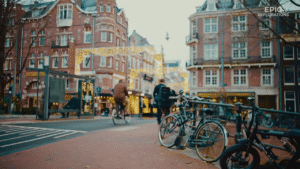
The Netherlands has long enjoyed a near-mythical reputation among expats, digital nomads, and anyone who has ever paused over a postcard of windmills at sunset.
It frequently appears in the top ten of global rankings such as the World Happiness Report, the OECD Better Life Index, and Mercer’s Quality of Living survey.
High wages, universal healthcare, thirty days of paid vacation as standard, and a cycling culture that makes even car lovers rethink their priorities contribute to this appeal.
On paper, few places look better.
Yet when you speak to enough residents—especially foreigners who have lived here beyond the honeymoon period—a more complex picture emerges.
The country is extraordinarily livable for a certain kind of person, yet quietly exhausting for others.
The promise is seductive.
Salaries in tech, finance, and engineering are among the highest in Europe after tax, and the 30 percent ruling for skilled migrants can make the first five years feel almost unreal.
Amsterdam, Rotterdam, Utrecht, and The Hague brim with international energy, and English is so widely spoken that learning Dutch feels optional.
The social safety net is strong, medical bankruptcy is almost unheard of, and violent crime is so low that parents comfortably let eight-year-olds cycle to school alone.
When celebrities like Joe Rogan, Russell Brand, and various tech founders praise Dutch directness and work-life balance, the reputation grows further.
This flat country by the North Sea starts to look like it has solved modern living.
| Category | Details |
| Population | 17.9 million (2025) |
| Life Expectancy | 82.3 years |
| World Happiness Rank 2025 | #5 (World Happiness Report) |
| Quality of Living Rank | Amsterdam #11 globally (Mercer 2024) |
| Average Net Salary (2025) | €3,200–€3,800 per month (after tax, highly skilled) |
| Minimum Vacation Days | 20 statutory plus typically 5–10 extra, totalling around 25–30 |
| Healthcare System | Mandatory private insurance with universal coverage |
| Safety (Global Peace Index 2024) | Ranked 16th safest country |
| Bike Lanes | Over 35,000 km of dedicated cycling paths |
| Housing Price (Amsterdam) | Average rent for a one-bedroom in the city center: €2,000–€2,600 |
| Reference | Government data and CBS Statistics Netherlands |
But the cracks appear quickly once you need a place to live.
The Dutch housing crisis has become almost surreal in its severity.
Waiting lists for social housing run between eight and fifteen years in the Randstad.
Private rentals in Amsterdam now rival London and Paris.
A small sixty-square-meter apartment in De Pijp or Jordaan often lists for around €2,200 before utilities.
Landlords may require first month’s rent, a deposit, and agency fees that together reach €6,000 to €8,000 just to move in.
Young Dutch adults are delaying families because they cannot buy homes.
Expats often end up in overpriced temporary anti-kraak setups or commute from places like Haarlem, Almere, or even across the Belgian border.
The social climate is another challenge.
The Dutch pride themselves on directness, which outsiders frequently interpret as blunt or even rude.
Invitations to Dutch homes are uncommon, and friendships tend to be long-established, forming circles that are difficult to enter.
Many expats joke about the “Dutch circle,” where you can work with someone for years and still never feel you are part of their inner social world.
Dating reflects similar patterns, with many people in their thirties stating they are not looking for anything serious.
For all the famed tolerance, the culture can feel surprisingly insular once you leave the international bubble.
The weather adds another hurdle.
Grey skies dominate much of the year, and rain arrives sideways more often than not.
Seasonal affective issues are rarely discussed openly, but sales of vitamin D and light-therapy lamps suggest a quiet widespread struggle.
Cycling is liberating in summer, yet battling cold wind and rain before sunrise in January quickly loses its charm.
Still, for every difficulty, there is an opposite force that keeps people rooted.
When a child is born, parents receive a kraamzorg nurse for eight days, offering hands-on guidance and support.
Parental leave is generous, childcare is high-quality and subsidized, and schools are calm and play-focused rather than obsessed with testing.
Healthcare is straightforward: you make a GP appointment the same day, pay nothing upfront, and collect medicines worth hundreds of euros for a predictable annual deductible.
These comforts shape a society built on stability rather than stress.
The celebrity migration tells its own story.
Actors such as Carice van Houten raise families quietly in North Holland.
Musicians like Martin Garrix remain based in the country.
Many Premier League footballers choose Amsterdam over London for the schools and overall lifestyle.
Even finance workers fleeing Brexit-era London have turned Amstelveen and Buitenveldert into bustling expatriate hubs.
They tolerate the high housing costs because the lifestyle trade-off feels undeniably worthwhile.
The bigger concern is sustainability.
Population growth has surged by nearly two million in fifteen years, largely through immigration, while housing construction has not kept pace.
Political sentiment has shifted rightward, with the PVV becoming the largest party in 2023, and mainstream parties now discussing limits on labor migration.
The golden era of open doors for skilled migrants may be ending.
Climate change adds another layer of pressure.
With over a quarter of its land below sea level, the Netherlands faces existential environmental risks.
Dutch engineering is remarkable, as shown by the Delta Works, yet even the best infrastructure has limits in the face of rising seas.
So is the Netherlands a great place to live?
The honest answer depends on who you are and what you seek.
If you arrive with a strong salary, realistic expectations about social life, and a tolerance for rain, the country can feel remarkably close to utopia.
If you are lower-skilled, seeking affordable housing, or longing for warmer, more expressive cultures, the experience may be far more difficult.
What remains undeniable is that the Dutch have built a society that values measurable well-being over grandeur and long-term planning over short-term gain.
In a world where many nations feel unstable, that steady achievement still shines, even under grey skies.