
UK Tax
UK Non-Domiciled Status Explained (How It Works and Who Qualifies in 2026)
A complete 2026 guide to UK non-domiciled status, including domicile types, remittance basis, qualification rules, and practical risk controls.
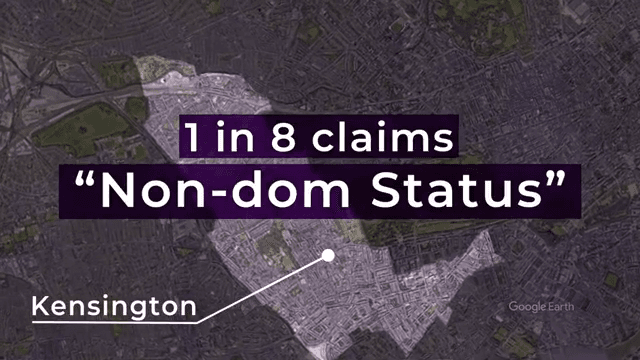
The concept of “non-domiciled status” in the UK is one of the most powerful—and most misunderstood—elements of the global tax system.
It is often associated with:
- reduced tax exposure
- foreign income advantages
- strategic residency planning
However, many people misunderstand what it actually means.
Some believe:
- simply living outside the UK makes you non-domiciled
- holding a foreign passport guarantees non-dom status
- non-dom status automatically eliminates tax obligations
These assumptions are incorrect.
Non-domiciled status is not based on:
- where you live today
but on:
- your long-term legal connection to a country
Understanding this distinction is critical.
This guide provides a complete, expert-level breakdown of:
- what non-domiciled status means
- how it is determined
- who qualifies
- how it affects taxation
- how it connects to global income planning
For official references, review HMRC, RDR1 guidance, and GOV.UK non-domiciled residents page.
The Core Concept: Residence vs Domicile
To understand non-domiciled status, you must separate two concepts:
- residence
- domicile
Residence
Residence refers to:
- where you live
- where you spend time
- where you are physically present
Domicile
Domicile refers to:
- your permanent home
- your long-term legal connection
- where you ultimately belong
Critical Insight:
You can be a UK resident but not UK domiciled.
This is the foundation of non-dom status.
What Does “Non-Domiciled” Mean?
A person is considered non-domiciled in the UK if:
- their permanent home (domicile) is outside the UK
Key Interpretation:
Even if you:
- live in the UK
- work in the UK
- earn income in the UK
You may still be:
- non-domiciled
Important Clarification:
Non-dom status is not automatic—it depends on legal criteria.
Types of Domicile
Understanding domicile requires breaking it into categories.
1. Domicile of Origin
This is:
- the domicile you acquire at birth
Usually based on:
- your father’s domicile (or parent)
Example:
If you are born to Nigerian parents:
- your domicile of origin is likely Nigeria
2. Domicile of Choice
You can change your domicile by:
- moving to another country
- intending to remain there permanently
Key Requirement:
You must show:
- clear intention
- permanent commitment
Insight:
Changing domicile is difficult and requires strong evidence.
3. Deemed Domicile
Even if you are not originally domiciled in the UK, you may become:
- “deemed domiciled”
This happens when:
- you have lived in the UK for a long period
Result:
You may lose:
- certain non-dom advantages
Why Non-Domiciled Status Matters
Non-dom status affects how you are taxed in the UK.
Key Benefit:
It allows different treatment of:
- UK income
- foreign income
Critical Concept:
The UK may not automatically tax:
- foreign income
depending on how it is handled
The Remittance Basis (Core Mechanism)
The main advantage of non-dom status is linked to:
The remittance basis of taxation
What It Means:
- UK income is taxed normally
- foreign income is taxed only if brought into the UK
Example:
If you:
- earn income outside the UK
- keep it outside the UK
It may not be:
- immediately taxed in the UK
Critical Insight:
Taxation depends on movement of money—not just earning.
For practical interaction with foreign-income rules, read Do You Pay UK Tax on Foreign Income?.
Who Qualifies for Non-Domiciled Status?
General Requirements:
You may qualify if:
- your permanent home is outside the UK
- you have not established domicile in the UK
- you can demonstrate long-term intention to remain connected to another country
Common Profiles:
1. Foreign Nationals Moving to the UK
- born outside the UK
- relocate for work or business
2. Nigerians Relocating Temporarily
- move to the UK for opportunities
- maintain long-term ties to Nigeria
3. Global Earners with Multi-Country Presence
- operate across jurisdictions
- maintain non-UK domicile
What Determines Your Domicile Status?
Authorities consider:
1. Permanent Home Intentions
- where you plan to live long-term
2. Family and Social Ties
- where your family is based
3. Economic Interests
- where your assets and businesses are
4. Duration of Stay
- how long you have lived in the UK
Key Insight:
Domicile is based on intention—not just location.
When You Lose Non-Domiciled Status
1. Long-Term Residence
After extended time in the UK:
- you may become deemed domiciled
2. Permanent Relocation Intent
If you:
- settle permanently
- cut ties with original country
Result:
You are treated as:
- UK domiciled
Impact:
- global income becomes fully taxable
Common Misconceptions About Non-Dom Status
1. “Living Outside the UK Makes Me Non-Dom”
Incorrect.
Domicile is not based on current residence.
2. “Non-Dom Means No Tax”
False.
You still pay tax on:
- UK income
3. “Foreign Income Is Always Tax-Free”
Incorrect.
It depends on:
- remittance
- structure
- classification
4. “Changing Domicile Is Easy”
It is legally complex and requires strong evidence.
Real-World Scenarios
Scenario 1: Nigerian Moving to the UK
- works in the UK
- maintains ties to Nigeria
Outcome:
- may qualify as non-domiciled
Scenario 2: Long-Term UK Resident
- lives in the UK for many years
Outcome:
- may become deemed domiciled
Scenario 3: Global Business Owner
- earns outside the UK
- controls funds abroad
Outcome:
- may benefit from remittance rules
For timeline-based eligibility screening, use UK FIG Regime Eligibility Tool.
Advanced Insight: Non-Dom Status Is About Control
Authorities assess:
- where your economic life is centered
- where decisions are made
- where your long-term commitment lies
Key Rule:
Control and intention define domicile—not just presence.
Risks of Misunderstanding Non-Dom Status
1. Incorrect Tax Assumptions
Leads to:
- underpayment
- compliance issues
2. Improper Income Handling
Bringing funds into the UK unintentionally triggers taxation.
3. Loss of Status
Failing to understand time-based rules
4. Poor Documentation
Inability to prove domicile position
How to Maintain Non-Domiciled Status
1. Maintain Clear Foreign Ties
- property
- family
- economic interests
2. Avoid Permanent Settlement Indicators
- long-term commitments in the UK
3. Track Time Spent in the UK
- monitor residency duration
4. Structure Financial Flows Carefully
- manage where income is held and moved
Frequently Asked Advanced Questions
Can a Nigerian be non-domiciled in the UK?
Yes, if their permanent home remains outside the UK.
Does non-dom status eliminate UK tax?
No. It changes how foreign income is treated.
How long can you remain non-domiciled?
It depends on your residency duration and intentions.
What is deemed domicile?
A status applied after long-term UK residence.
Can non-dom status be challenged?
Yes, if evidence does not support your claim.
Final Perspective
Non-domiciled status is not a loophole—it is a structured legal position based on:
- long-term intent
- economic ties
- residency patterns
Those who misunderstand it risk:
- incorrect tax assumptions
- compliance issues
- loss of benefits
Those who understand it can:
- manage global income effectively
- align with UK tax rules
- operate across borders with clarity
Next Step: Evaluate Your Position
To determine your status, assess:
- your country of origin
- your long-term intentions
- your financial structure
- your residency pattern
Without this, you are operating on assumptions—not strategy.
Conclusion
UK non-domiciled status is a powerful concept that affects how global income is taxed.
It is determined not by where you are today, but by:
- where you belong long-term
By understanding:
- domicile vs residence
- remittance rules
- long-term implications
you move from:
- confusion
to
- strategic clarity
And in a global tax environment, that clarity is essential.
2026 Legal Update Note (Critical)
For current-year accuracy, readers should treat legacy non-dom and remittance-basis language as historical context. The UK framework changed from 6 April 2025 to a new foreign income and gains approach for qualifying cases.
Primary references:
- Reform to the taxation of non-UK domiciled individuals
- Tax on foreign income
- RDR3 Statutory Residence Test
Technical Precision Upgrade
In 2026 planning, do not stop at the domicile label. Build a full-status pack:
- SRT outcome
- year-specific income segmentation
- relief window timing
- fund-movement log
For practical comparisons, read UK FIG Regime vs Normal UK Taxation.
2026 Accuracy Note: Legacy Label vs Current Filing Reality
For current planning cycles, treat “non-dom” language as historical context, not a standalone filing strategy. 2026 outcomes should be based on:
- SRT residency result
- current foreign income treatment rules
- year-specific evidence of source, control, and movement
Official anchor pages:
Continue reading
Explore other implementation notes in the blog or return to the tool suite.