
Global Tax
How Nigerians Can Legally Access UK Tax Advantages Without Fully Relocating (Advanced Strategic Guide)
An advanced strategic guide on how Nigerians can access UK tax advantages without full relocation through residency positioning, income structuring, cross-border discipline, and defensible compliance.
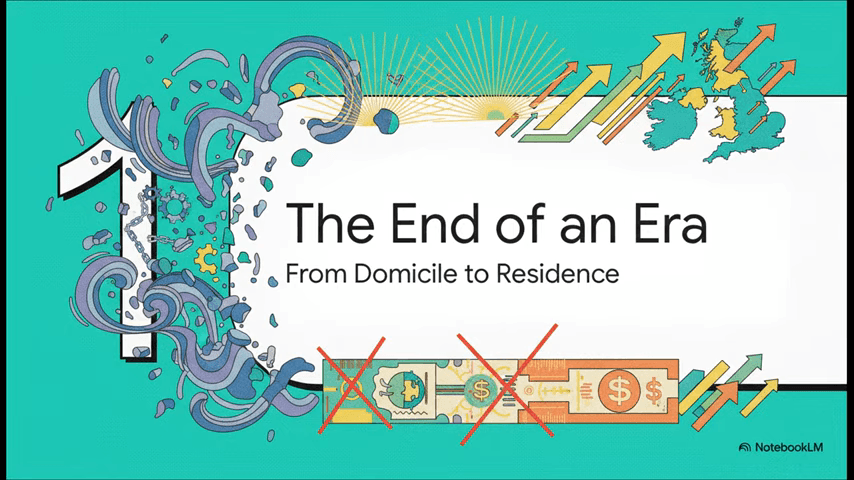
Many Nigerian founders, remote earners, and globally active professionals assume that accessing UK tax advantages requires one major step:
“You must relocate to the UK.”
This assumption is not entirely accurate.
While physical presence plays a critical role in tax residency, access to certain UK tax advantages is not strictly dependent on full relocation. What matters more is how your:
- residency status is defined
- income is structured
- business operations are organized
- cross-border activity is managed
This creates a strategic opportunity.
However, it also introduces complexity. Without proper understanding, individuals may:
- assume benefits they do not actually qualify for
- create unintended tax exposure
- trigger compliance risks in both Nigeria and the UK
This guide explains how Nigerians can legally and strategically position themselves to access UK tax advantages without fully relocating, while maintaining compliance across both jurisdictions.
For official baselines, review HMRC, HMRC Statutory Residence Test (RDR3), FIRS, and CAC.
The Core Misconception: Relocation vs Tax Positioning
Most discussions around UK tax benefits focus on relocation.
In reality, tax outcomes are determined by:
- residency classification
- economic activity
- source of income
- legal structure
Relocation is just one variable.
Expert Insight:
It is possible to interact with the UK tax system without being fully embedded in it.
But doing so requires:
- precise positioning
- clear understanding of rules
- consistent behavior
Understanding the Two Systems You Are Navigating
To operate effectively, you must understand both:
- Nigerian tax system
- UK tax system
Nigerian Context
Nigeria taxes individuals based on:
- residency
- income source
Key characteristics:
- focus on locally sourced income
- structured SME thresholds
- compliance through filings and documentation
UK Context
The UK applies:
- structured residency rules
- detailed income classification
- broader taxation scope for residents
It also introduces:
- differentiated treatment of foreign income
- structured frameworks affecting cross-border earnings
Cross-system primer: Nigeria vs UK Tax Residency Rules.
The Strategic Opportunity (What Actually Exists)
The opportunity lies in:
Operating across both systems without triggering full tax exposure in either unnecessarily
This is not about avoiding tax.
It is about:
- aligning structure with legal frameworks
- managing where and how income is taxed
- maintaining compliance in both jurisdictions
Core Principle: You Are Managing Two Risk Systems
Every decision must consider:
- Nigerian tax obligations
- UK tax implications
Critical Insight:
Many people focus only on:
- gaining UK advantages
But ignore:
- losing Nigerian advantages
or
- triggering UK obligations unintentionally
Pathways Nigerians Use to Access UK Tax Advantages
There is no single method. Instead, there are strategic pathways.
Pathway 1: Controlled UK Presence Without Full Residency
Some individuals:
- spend limited time in the UK
- maintain primary base in Nigeria
Objective:
- avoid full UK tax residency
- maintain flexibility
Key Considerations:
- number of days spent in the UK
- ties such as accommodation and work
- consistency of presence
Hidden Risk:
Irregular or poorly tracked presence can:
- accidentally trigger UK residency
Pathway 2: Foreign Income Structuring with UK Interaction
Individuals may:
- earn income outside the UK
- interact with UK systems (clients, accounts, operations)
Objective:
- maintain foreign income classification
- benefit from structured treatment
Critical Requirement:
Income must remain:
- clearly foreign
- properly documented
Pathway 3: Business Structuring Across Jurisdictions
Some founders:
- operate Nigerian-based entities
- engage with international markets, including the UK
Objective:
- maintain Nigerian SME advantages
- access global revenue streams
Expert Insight:
Structure determines:
- where income is taxed
- how it is classified
Improper structuring can:
- collapse the intended benefit
Related structuring guides: How to Structure Your Business to Legally Reduce Tax in Nigeria and Nigeria SME Tax Compliance Checklist.
Pathway 4: Gradual Residency Transition Strategy
Instead of immediate relocation, some individuals:
- transition over time
- adjust presence gradually
Objective:
- control when UK tax obligations begin
- plan for structural alignment
Advanced Insight:
Transition periods are high-risk phases because:
- classification can change mid-cycle
- reporting obligations become complex
Where Most Nigerians Get It Wrong
1. Assuming Foreign Income Is Automatically Advantageous
Foreign income must still be:
- properly classified
- consistently reported
2. Ignoring UK Residency Triggers
Even limited presence can:
- create unexpected obligations
3. Mixing Personal and Business Structures
This leads to:
- unclear income classification
- compliance complications
4. Weak Documentation
Without:
- contracts
- invoices
- transaction records
your position becomes difficult to defend
Advanced Insight: Dual-System Friction
Operating between Nigeria and the UK creates friction in:
- classification of income
- timing of taxation
- reporting expectations
Example:
An income stream may:
- appear foreign in Nigeria
- be interpreted differently under UK rules
Defensibility Framework (Critical for Cross-Border Positioning)
To safely access advantages, your position must be defensible.
This means you should be able to explain:
- where your income originates
- where your work is performed
- how your business is structured
- why your tax position is consistent
Key Rule:
If your structure cannot be clearly explained, it is vulnerable.
Related risk checks: How to Check If You Qualify for the UK FIG Regime and Who Qualifies for the UK FIG Regime?.
Real-World Strategic Scenarios
Scenario 1: Nigeria-Based Founder with Global Clients
- operates from Nigeria
- earns from international clients
Opportunity:
- maintain Nigerian SME advantages
Risk:
- misclassifying income if structure is unclear
Scenario 2: Partial UK Presence Remote Worker
- spends time in both countries
- earns globally
Opportunity:
- structured positioning
Risk:
- accidental UK residency
Scenario 3: Transitioning Founder
- planning to move to the UK
- adjusting structure gradually
Opportunity:
- optimize timing
Risk:
- misalignment during transition
Decision Framework: Can You Access UK Advantages Without Relocating?
Evaluate:
1. Residency Position
- are you clearly non-UK resident?
2. Income Structure
- is your income clearly foreign?
3. Structural Clarity
- does your business setup support your position?
4. Documentation Strength
- can you prove everything?
5. Behavioral Consistency
- can you maintain stable patterns?
Outcome:
- strong alignment -> potential advantage
- weak alignment -> high risk
What Most Guides Will Not Tell You
1. Benefits Are Conditional, Not Guaranteed
They depend on:
- behavior
- structure
- consistency
2. Cross-Border Positioning Requires Discipline
Small mistakes can:
- invalidate advantages
- create dual tax exposure
3. Simplicity Has Value
In some cases:
- staying fully within one system is safer
Frequently Asked Advanced Questions
Can I benefit from UK tax rules without living there?
Yes, but only through structured positioning and limited interaction.
Does opening a UK account create tax obligations?
Not by itself, but context matters.
Can I operate a UK-facing business from Nigeria?
Yes, but classification must be clear.
Is partial presence safe?
Only if carefully managed and documented.
Can I optimize both Nigerian and UK tax positions simultaneously?
Yes, but requires precise alignment.
Final Perspective
Accessing UK tax advantages without full relocation is not about shortcuts.
It is about:
- understanding both systems
- structuring your position carefully
- maintaining consistency
For those who approach this strategically, there is opportunity.
For those who rely on assumptions, there is risk.
Next Step: Evaluate Your Cross-Border Position
At this level, assumptions are dangerous.
You need to assess:
- your residency exposure
- your income classification
- your structural alignment
A structured evaluation can help identify:
- whether you are positioned correctly
- where risks exist
- what adjustments may be required
For practical evaluation, use the UK FIG Regime Eligibility Tool and the Nigeria Zero-Tax Auditor.
Conclusion
Nigerians can access aspects of UK tax advantages without full relocation, but only through:
- clear residency positioning
- proper income structuring
- consistent compliance
This is not a simple strategy. It is a system.
And in cross-border taxation, systems—not assumptions—determine outcomes.
Cross-Border Integrity Layer
Without full relocation, the decisive variable is consistency between:
- your travel pattern
- your control narrative
- your income-source documentation
- your filing behavior in each jurisdiction
Any mismatch invites reclassification risk.
Dual-System Case Lens
A Nigerian founder with sporadic UK presence kept complete day-count records and decision-control memos, preserving a coherent position. A similar founder with no travel ledger faced avoidable ambiguity during advisory review.
Primary Sources for Boundary Conditions
Cross-Border Control Test (Founders and Remote Earners)
Ask one difficult question each quarter:
If both Nigerian and UK reviewers examine this same file, will they see one coherent story?
If the answer is uncertain, upgrade documentation before the next filing cycle. Coherence is a stronger defense than after-the-fact explanation.
Continue reading
Explore other implementation notes in the blog or return to the tool suite.