


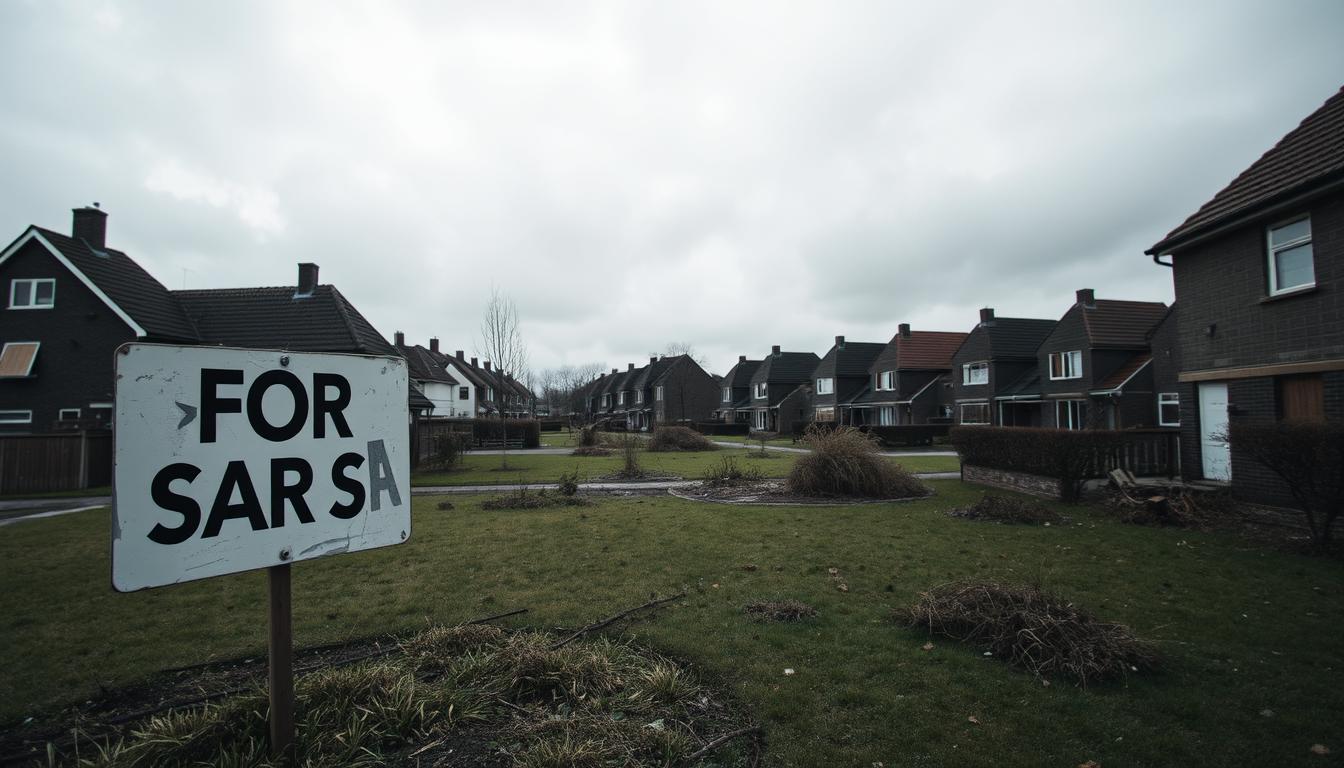
The Dutch housing market is experiencing a significant downturn, often referred to as a housing crisis. This phenomenon has sparked widespread concern among potential homebuyers, investors, and policymakers.
The recent Dutch Housing Meltdown has led to a complex situation, with various factors contributing to the instability of the market. Understanding the intricacies of this crisis is crucial for navigating its implications.
As the situation continues to unfold, it is essential to stay informed about the developments in the Dutch housing market.
Key Takeaways
- The Dutch housing market is facing a significant collapse.
- The housing crisis is affecting various stakeholders.
- Understanding the causes is crucial for navigating the implications.
- The market’s instability is influenced by multiple factors.
- Staying informed is essential for making informed decisions.
The Current State of the Dutch Housing Meltdown
As the Dutch housing meltdown continues, understanding its current state is crucial. The Dutch housing market has been experiencing a significant downturn, with various factors contributing to its decline.
The latest data on housing market statistics and price trends provide valuable insights into the current state of the crisis. According to recent reports, housing prices in the Netherlands have dropped significantly over the past year.
Latest Market Statistics and Price Trends
The Dutch real estate market has seen a notable decline in housing prices, with some areas experiencing drops of up to 10% in the past 12 months. The average house price in the Netherlands has decreased from €340,000 to €320,000, indicating a shift in the market dynamics.
Market statistics also show a decrease in the number of transactions, with a 15% drop in home sales compared to the previous year. This decline is attributed to various factors, including rising interest rates and decreased consumer confidence.
Most Affected Regions and Cities
The Dutch housing meltdown is not uniform across the country; certain regions and cities are more affected than others. Major cities like Amsterdam and Utrecht have seen significant price drops, with Amsterdam experiencing a 12% decrease in average house prices.
Other regions, such as the Randstad area, are also heavily impacted due to their high concentration of housing stock and economic activity. The decline in these areas is largely driven by the decrease in demand and the oversupply of housing in certain segments.
How the Crisis Unfolded: Timeline of Key Events
Understanding the Dutch housing crisis requires examining the timeline of events that led to its current state. The crisis did not develop overnight but was the result of a series of significant occurrences that ultimately led to the market’s downturn.
The Breaking Point: When the Market Began to Turn
The Dutch housing market’s decline can be traced back to early 2022 when housing prices began to stagnate after a period of rapid growth. As
“the housing market was experiencing a correction phase, which was expected given the previous year’s surge in prices,”
noted a financial analyst. This stagnation marked the beginning of the end of the housing boom.
Several factors contributed to this turning point, including rising interest rates and decreased consumer confidence. As a result, potential buyers began to hesitate, leading to a decrease in demand and, subsequently, a drop in housing prices.
Acceleration Factors in 2022-2023
In 2022 and 2023, several factors accelerated the Dutch housing crisis. One major factor was the increase in mortgage rates, making it more expensive for people to buy or maintain homes. As a financial expert pointed out,
“the rise in mortgage rates was a significant blow to the housing market, as it directly impacted affordability.”
Additionally, economic uncertainty and geopolitical tensions further eroded consumer confidence, leading to a sharper decline in housing prices. The combination of these factors created a perfect storm that accelerated the crisis.
Primary Causes Behind the Dutch Housing Meltdown
Understanding the Dutch housing meltdown requires examining various underlying causes. The crisis has been multifaceted, involving macroeconomic factors, structural market issues, and policy and regulatory triggers.
Macroeconomic Factors
Macroeconomic conditions have played a significant role in the Dutch housing market collapse. Two key factors have been particularly influential.
Interest Rate Hikes and Inflation Impact
The increase in interest rates has directly affected mortgage costs, making it more expensive for individuals to purchase or maintain homes. As a result, demand has decreased, contributing to the market downturn. “The rise in interest rates has been a significant factor in the housing market’s decline,” notes a financial analyst. Inflation has also eroded purchasing power, further dampening demand.
Energy Crisis Spillover Effects
The energy crisis has had a ripple effect on the housing market, increasing costs for homeowners and potentially affecting property values. Higher energy costs have made housing more expensive to maintain, contributing to the meltdown.
Structural Market Issues
Beyond macroeconomic factors, structural issues within the Dutch housing market have contributed to the crisis.
Housing Shortage Paradox
Despite a shortage of housing, prices have fallen, indicating a complex interplay between supply and demand. This paradox highlights the complexity of the Dutch housing market.
Speculation and Investment Patterns
Speculative buying and investment patterns have historically driven up housing prices. As these patterns have shifted, prices have adjusted accordingly, contributing to the current meltdown.
“The Dutch housing market has long been subject to speculative pressures, which have now unwound as market conditions have changed.”
Policy and Regulatory Triggers
Policy and regulatory decisions have also played a crucial role in the Dutch housing meltdown.
Regulatory changes aimed at cooling the market have had unintended consequences, such as reducing demand and causing prices to drop. Additionally, policies intended to address housing shortages have not kept pace with demand, exacerbating the crisis.
As the Dutch government navigates the housing crisis, understanding these primary causes will be essential for developing effective solutions.
Impact on Different Stakeholders
As the Dutch housing meltdown continues, its impact on different stakeholders becomes more apparent. The crisis is affecting various groups in distinct ways, from current homeowners to first-time buyers and the rental market.
Current Homeowners Facing Negative Equity
Current homeowners are among those significantly affected by the Dutch housing market collapse. Many are facing the challenge of negative equity, where the outstanding mortgage exceeds the current value of their property. This situation can be particularly stressful for those who purchased their homes at the peak of the market.
The issue of negative equity is compounded by rising interest rates, which increase the financial burden on homeowners with variable-rate mortgages. As a result, some homeowners may struggle to meet their mortgage payments, potentially leading to an increase in foreclosures.

First-Time Buyers: Challenges and Opportunities
First-time buyers are experiencing a mixed bag of challenges and opportunities in the current market. On one hand, the decrease in housing prices makes it more affordable for new buyers to enter the market. However, lenders have become more cautious, making it harder for first-time buyers to secure mortgages.
Additionally, the overall uncertainty in the housing market may deter some potential buyers, further reducing demand. On the other hand, the lower prices could stimulate the market in the long run by attracting more buyers.
Rental Market Consequences
The rental market is also feeling the effects of the housing meltdown. As more people are priced out of buying homes, the demand for rental properties is likely to increase. This could lead to higher rental prices, although the current economic uncertainty might temper this effect.
| Stakeholder | Challenges | Opportunities |
|---|---|---|
| Current Homeowners | Negative equity, increased mortgage payments | Potential for selling before further price drop |
| First-Time Buyers | Stricter lending criteria, market uncertainty | Lower housing prices, potential for long-term investment |
| Rental Market | Increased demand potentially leading to higher rents | Opportunity for investors, increased rental yields |
Economic Ripple Effects Throughout the Netherlands
The Netherlands is experiencing significant economic ripple effects due to the housing market downturn, with various sectors being affected.
The housing market collapse is not only affecting homeowners and potential buyers but also has broader implications for the overall economy. The construction and real estate sectors are particularly vulnerable to these changes.
Construction and Real Estate Sector Fallout
The construction sector, a significant contributor to the Dutch economy, is facing a downturn due to reduced demand for new housing projects. This slowdown is having a cascading effect on related industries, such as construction materials suppliers and labor services.
The real estate sector is also experiencing a decline, with fewer transactions and lower property prices affecting the revenue of real estate agents and related businesses.
| Sector | Impact | Potential Consequences |
|---|---|---|
| Construction | Reduced demand for new projects | Job losses, decreased economic activity |
| Real Estate | Fewer transactions, lower prices | Reduced revenue for agents, potential business closures |
Banking Stability Concerns
The housing market downturn is also raising concerns about banking stability. With more homeowners facing financial difficulties, there’s an increased risk of mortgage defaults, which could impact banks’ balance sheets.
Banks have been tightening their lending criteria in response to the crisis, making it harder for potential buyers to secure mortgages. This tightening could further slow down the housing market and exacerbate the economic ripple effects.
Consumer Confidence and Spending Patterns
The economic uncertainty caused by the housing market collapse is affecting consumer confidence. As people feel less secure about their financial situation, they are reducing their spending, which in turn affects businesses across various sectors.
Changes in consumer spending patterns are having a ripple effect on the overall economy, with potential long-term implications for economic growth and stability.
Government and Institutional Responses
In response to the escalating Dutch housing market crisis, the government and financial institutions have initiated a series of measures to mitigate its impact. The multifaceted approach aims to address the root causes of the crisis and provide relief to affected stakeholders.
Emergency Measures Implemented
The Dutch government has introduced several emergency measures to stabilize the housing market. These include financial assistance packages for homeowners facing negative equity and subsidies for first-time buyers to encourage market activity. Additionally, the government has implemented policies to regulate the rental market, protecting tenants from exorbitant rent increases.
These measures are designed to provide immediate relief and prevent further market deterioration. By supporting both homeowners and renters, the government aims to maintain social stability and stimulate economic recovery.
Dutch Central Bank Interventions
The Dutch Central Bank has played a crucial role in responding to the housing market crisis. By adjusting monetary policies, the bank has sought to influence interest rates and improve liquidity in the financial system. These interventions aim to reduce the burden on homeowners with variable-rate mortgages and encourage lending to stimulate economic activity.

Political Debates and Proposed Solutions
The housing market crisis has sparked intense political debates in the Netherlands, with various parties proposing different solutions. Some advocate for stricter regulations on the housing market, while others suggest increasing the supply of affordable housing. The debates have also highlighted the need for long-term structural reforms to prevent similar crises in the future.
As the political landscape continues to evolve, the effectiveness of the government’s responses will be closely monitored. The outcome of these debates will be crucial in shaping the future of the Dutch housing market and the overall economy.
International Context and Comparisons
As the Dutch housing market continues to grapple with a significant downturn, it’s essential to consider this crisis within the broader international context. Housing markets worldwide have experienced fluctuations due to various economic factors.
“The global economy is increasingly interconnected, making national housing markets susceptible to international trends and economic shifts,” notes an economic analyst.
Similar Housing Market Corrections Globally
Several countries have witnessed significant housing market corrections in recent years. For instance, the UK experienced a notable downturn following Brexit, while the US saw corrections in various regional markets.
The global nature of these corrections suggests a common thread, potentially linked to macroeconomic factors such as interest rate changes and economic uncertainty.
What Makes the Dutch Situation Unique
Despite global parallels, the Dutch housing market’s situation is distinct due to its specific structural issues, such as a chronic shortage of housing supply and unique demographic factors.
The Netherlands’ dense population and the high demand for housing, coupled with stringent building regulations, have exacerbated the crisis, making it a complex case study.
As one expert puts it, “The Dutch housing market is a perfect storm of high demand, limited supply, and regulatory challenges.”
Expert Analyses and Future Projections
As the Dutch housing market continues to navigate through turbulent times, experts are weighing in on the potential recovery timeline. The current situation has sparked a mix of opinions on what the future holds for this critical sector of the Dutch economy.
Recovery Timeline Predictions
Economists and industry analysts have been studying the trends and factors influencing the Dutch housing market. According to a recent report, the recovery is expected to be gradual, with some predicting a stabilization of prices within the next two years. However, the exact timeline varies depending on several factors, including government interventions and global economic conditions.
Some experts believe that the market will start to recover by 2025, driven by a combination of government policies and natural market adjustments. Others are more cautious, suggesting that it could take longer for the market to fully recover.
Structural Changes Expected in the Dutch Housing Market
The Dutch housing market is not only expected to recover but also undergo significant structural changes. Experts point to a potential shift towards more sustainable and affordable housing solutions. This could involve increased investment in renovation projects and new builds that meet modern environmental standards.
Another anticipated change is the adjustment in consumer behavior and preferences. With the rise of remote work, there’s a growing demand for housing in suburban and rural areas, potentially altering the traditional urban-centric housing market dynamics.
The future of the Dutch housing market will likely be shaped by a combination of these factors, leading to a market that is more resilient and adaptable to future challenges.
Lessons and Implications for Global Housing Markets
The Dutch housing meltdown offers valuable lessons learned for global housing markets. As one of Europe’s most densely populated countries, the Netherlands’ housing crisis has far-reaching implications. The crisis highlights the importance of addressing structural market issues, such as housing shortages and unaffordable prices, to prevent similar meltdowns elsewhere.
The Dutch housing meltdown implications are particularly relevant for countries with similar housing market characteristics. Policymakers worldwide can draw on the Netherlands’ experience to inform their own housing policies and mitigate potential risks. By understanding the causes and consequences of the Dutch housing crisis, global housing markets can better prepare for potential future shocks.
As the global housing market continues to evolve, the lessons learned from the Dutch housing meltdown will remain relevant. By analyzing the Dutch experience, investors, policymakers, and homeowners can gain insights into the complex interplay between macroeconomic factors, policy interventions, and housing market outcomes.


